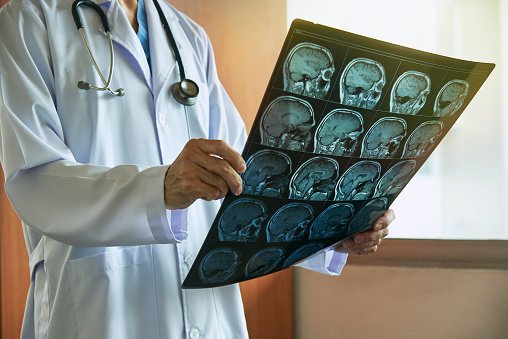
Becoming a neurosurgeon is arguably the most rigorous medical journey in Nigeria. As of 2026, the path has become even more specialized with new accreditation standards from the West African College of Surgeons (WACS) and the National Postgraduate Medical College of Nigeria (NPMCN).
Here is the updated guide on the cost, duration, and requirements for studying Neurosurgery in Nigeria.
What is Neurosurgery?
Neurosurgery is the surgical treatment of the nervous system.
Neurosurgery, also known as brain surgery, is a medical specialty that focuses on the prevention, diagnosis, surgical treatment, and rehabilitation of disorders affecting any part of the nervous system, including the brain, spinal cord, central and peripheral nervous systems, and cerebrovascular system.
Most people associate neurosurgery with brain surgery, but it is actually more than that.
It is the medical specialty concerned with the diagnosis and treatment of patients suffering from injuries to, or diseases/disorders of, the brain, spinal cord, and spinal column, as well as peripheral nerves in all parts of the body.
Adult and pediatric patients are both treated in the field of neurosurgery.
A neurological surgeon may provide surgical and/or non-surgical care depending on the nature of the injury or disease.
What is the Role of a Neurosurgeon?

A neurosurgeon is a doctor who specializes in brain surgery.
Neurosurgeons are medically trained neurosurgical specialists who can help patients with back and neck pain, as well as a variety of other illnesses ranging from trigeminal neuralgia to head injury and Parkinson’s disease.
Neurosurgeons manage neurological disorders both surgically and non-surgically (i.e., prevention, diagnosis, evaluation, treatment, critical care, and rehabilitation).
Because neurosurgeons have extensive training in the diagnosis of all neurological diseases, they are frequently consulted by emergency room doctors, neurologists, internists, family practitioners, and osteopaths.
Is Neurosurgery Studied in Nigeria?
Yes, neurosurgery is studied in Nigeria, but not at bachelor’s level.
You cannot study Neurosurgery at the undergraduate level. In Nigeria, it is a postgraduate residency program. To begin, you must first become a licensed Medical Doctor (MBBS).
Before you can go ahead with the training, the Medical and Dental Council of Nigeria (MDCN) must certify you as a medical practitioner.
Following that, you will be required to take and pass a type of medical exam known as ‘Primaries‘ before applying for residency training in Neurosurgery.
Another 6 to 7 years are required to be certified as a specialist, consultant, or professional in Neurosurgery.
Furthermore, neurosurgery is governed by the West African College of Surgeons (WACS) rather than the Nigerian Universities Commission (NUC).
In Nigeria, it takes a total of 15 years to become a neurosurgeon: 6 years in medical school, 1 year of mandatory housemanship, 1 year of mandatory National Youth Service Corps (NYSC), and 7 years of residency training in any of the accredited teaching hospitals or federal medical centres.
The Journey (15-Year Timeline)
Becoming a Consultant Neurosurgeon in Nigeria typically follows this timeline:
-
Medical School (6 Years): Obtain your MBBS degree.
-
Internship/Housemanship (1 Year): Paid clinical rotation at an MDCN-accredited hospital.
-
National Youth Service (NYSC) (1 Year): Mandatory service to the nation.
-
Primary Fellowship Exam: You must pass the “Primaries” in Surgery conducted by WACS or NPMCN.
-
Residency Training (6–7 Years): Specialized training in an accredited neurosurgical unit.
-
Part I (Membership): 30–36 months of general surgical and basic neurosurgical rotations.
-
Part II (Fellowship): 36–48 months of intensive neurosurgery focus, concluding with a dissertation and final exams.
-
Accredited Neurosurgery Training Centers (2026)
As of 2026, the number of accredited centers has grown. Key training institutions include:
| Institution | Location | Accreditation Status |
| University College Hospital (UCH) | Ibadan | Full |
| Lagos University Teaching Hospital (LUTH) | Lagos | Full |
| Memfys Hospital for Neurosurgery | Enugu | Only Private Center with Full Accreditation |
| University of Nigeria Teaching Hospital (UNTH) | Enugu | Full |
| Ahmadu Bello University Teaching Hospital (ABUTH) | Zaria | Full |
| Lagos State University Teaching Hospital (LASUTH) | Lagos | Full |
| Aminu Kano Teaching Hospital (AKTH) | Kano | Full |
| Usmanu Danfodiyo University Teaching Hospital (UDUTH) | Sokoto | Full |
The accredited teaching hospitals that train doctors to become neurosurgery specialists are as follows:
- Usmanu Danfodiyyo Teaching Hospital (UDUTH), Sokoto, Sokoto State
- University of Benin Teaching Hospital (UBTH), Benin City, Edo State
- University of Nigeria Teaching Hospital (UNTH), Enugu.
- Ahmadu Bello Teaching Hospital (ABUTH), Zaria, Kaduna
- University College Hospital (UCH), Ibadan, Oyo State.
- Obafemi Awolowo Teaching Hospital (OAUTH), Ife, Osun State.
- Lagos University Teaching Hospital (LUTH), Lagos State.
- University of Port Harcourt Teaching Hospital (UPTH), Port Harcourt, Rivers State (UPTH has partial accreditation)
- Memfys Hospital for Neurosugery, Enugu (This is the only privately-owned hospital that has been given full accreditation by the West African College of Surgeons (WACS), in Nigeria, for residency training.
- Aminu Kano Teaching Hospital (AKTH), Kano.
How Many Years does it Take to Study Neurosurgery in Nigeria?
In Nigeria, it takes a total of 15 years to become a neurosurgeon: 6 years in medical school, 1 year of mandatory housemanship, and 1 year for the mandatory National Youth Service Corps (NYSC), and 7 years of residency training in any of the accredited teaching hospitals or federal medical centres.
Cost of Training to be a Neurosurgeon
The “cost” is divided into two phases: Undergraduate (MBBS) and Postgraduate (Residency).
1. Undergraduate Phase (MBBS)
-
Public Universities: Tuition ranges from ₦150,000 to ₦500,000 per session.
-
Private Universities: Schools like Nile University or Babcock can cost between ₦3,000,000 and ₦6,500,000 per session.
2. Postgraduate Phase (Residency)
In Nigeria, residency is a paid job, not a traditional “school” where you pay tuition. However, there are significant costs:
-
Exam Fees: WACS/NPMCN exams (Primaries, Part I, Part II) cost between ₦150,000 and ₦300,000 per attempt.
-
Update Courses: Mandatory revision courses cost approximately ₦50,000 to ₦100,000 each.
-
External Rotations: Many residents opt for a 6-month international rotation (e.g., in South Africa or the UK), which can cost $5,000 – $15,000 if not sponsored.
Salary and Compensation (2026 Estimates)
Neurosurgery remains the highest-paid surgical specialty.
-
Resident Doctor (Trainee): Earns between ₦350,000 and ₦550,000 monthly (depending on level and hazard allowance updates).
-
Entry-Level Consultant: Earns between ₦800,000 and ₦1,200,000 monthly in government hospitals.
-
Experienced Private Consultant: Can earn upwards of ₦3,000,000 to ₦7,000,000 monthly depending on the number of surgeries performed.
Relevant External Links
-
West African College of Surgeons (WACS): For official residency curricula and exam schedules.
-
Medical and Dental Council of Nigeria (MDCN): To verify licensed practitioners and accredited medical schools.
-
Nigerian Academy of Neurological Surgeons (NANS): The professional body for neurosurgeons in Nigeria.
Have any thoughts?
Share your reaction or leave a quick response — we’d love to hear what you think!
-
 0
0
-
 0
0
-
 0
0
-
 0
0
-
 0
0
-
 0
0
