School Reviews by Real Students.
  • Home
  • University
    • Federal University
    • State University
    • Private University
  • Polytechnic
    • State Polytechnic
    • Federal Polytechnic
  • college of Edu
  • Other Institutions
    • Scholarship
    • Business
    • MBA
  • Privacy Policy
  • About Us
  • Contact Us
Home » University
Category:

University

Reviews of all Nigerian Universities
Delta State University's building
Federal UniversityState UniversityUniversity

Universities That Accept IJMB for Pharmacy in Nigeria: 2025/2026 Requirements & Points

by Maryam A January 4, 2026
written by Maryam A

Admission to a Bachelor of Pharmacy (B.Pharm) program via the Interim Joint Matriculation Board (IJMB) is one of the most competitive Direct Entry (DE) routes in Nigeria. For the 2025/2026 academic session, universities have tightened their requirements, with some top-tier institutions no longer accepting IJMB for high-competition medical courses.

Below is the updated list and specific requirements for universities accepting IJMB for Pharmacy in 2026.

Top Universities Accepting IJMB for Pharmacy (2026)

While most Northern and many Federal universities remain open to IJMB candidates, there are significant updates for Southern “Ivy League” schools.

University Status (2025/2026) Minimum IJMB Points Needed
Ahmadu Bello University (ABU) Accepts 10 – 12 Points
University of Ilorin (UNILORIN) Accepts 12 – 14 Points
University of Benin (UNIBEN) Accepts 12+ Points
University of Jos (UNIJOS) Accepts 11+ Points
University of Nigeria (UNN) Accepts 12 – 13 Points
University of Lagos (UNILAG) Closed for IJMB Only accepts JUPEB or UNILAG Foundation
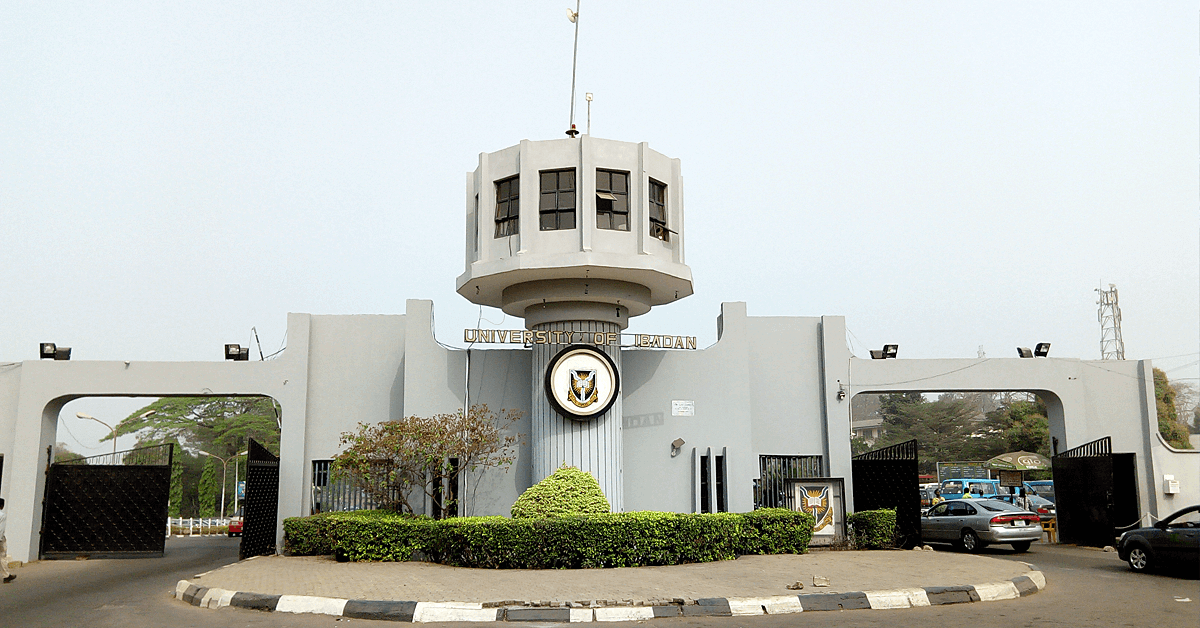
University of Ibadan (UI) Closed for IJMB Does not accept IJMB/JUPEB for DE

University of Ilorin

A picture of the University of Ilorin

University of Ilorin (UNILORIN)

  • IJMB Requirement: Minimum of 12 points in Chemistry, Biology, and Physics.

  • O’Level: Must have 5 credits in ONE SITTING for Pharmacy.

  • Link: UNILORIN Admission Portal

University of Benin

A picture of the University of Benin

  • IJMB Requirement: UNIBEN typically requires at least 12 points.

  • Constraints: They do not accept Mathematics as a substitute for Physics in Pharmacy.

  • Degree Holders: Accepts B.Sc. (Second Class Upper) in related science fields.

University of Lagos (Closed for IJMB)

Logo of the University of Lagos

Only accepts JUPEB or UNILAG Foundation

University of Jos

A picture of the University of Jos

  1. Direct Entry candidates must have five (5) ‘O’ Level credit passes in English Language, Mathematics, Physics, Chemistry, and Biology in addition to the ‘A’ Level requirements.
  2. UNIJOS accepts students with a B.Sc. second class or above in relevant programs.

University of Nigeria, Nsukka (UNN)

A picture of the University of Nigeria, Nsukka

  • IJMB Requirement: Three ‘A’ level passes in Chemistry, Biology/Zoology/Botany, and Physics.

  • O’Level: Must satisfy UTME requirements in no more than two sittings.

  • Link: UNN Faculty of Pharmacy


Ahmadu Bello University (ABU), Zaria

  • IJMB Requirement: At least 10 points in Biology, Chemistry, and Physics.

  • Note: ABU is the primary moderator of IJMB, making it the “home” for IJMB candidates.

  • Link: ABU Zaria Official Website

University of Benin (UNIBEN)

  • IJMB Requirement: UNIBEN typically requires at least 12 points.

  • Constraints: They do not accept Mathematics as a substitute for Physics in Pharmacy.

  • Degree Holders: Accepts B.Sc. (Second Class Upper) in related science fields.

University of Lagos (UNILAG) – CRITICAL UPDATE

  • Warning: As of the 2025/2026 session, UNILAG does not accept IJMB for Pharmacy. They strictly accept their own Foundation Program (JUPEB) or very high-grade B.Sc. degrees in related fields.

University of Ibadan (UI) – CRITICAL UPDATE

  • Warning: UI does not accept IJMB or JUPEB for Direct Entry. Admission into Pharmacy at UI is almost exclusively through UTME or for candidates with a previous first degree from a recognized university.

How to Calculate Your IJMB Points

To see if you qualify for the 12–14 point threshold, use this scale:

  • A = 5 Points

  • B = 4 Points

  • C = 3 Points

  • D = 2 Points

  • E = 1 Point

  • F = 0 Points

  • Bonus: 1 extra point is added if you have no “F” in your three subjects.

2026 Success Tips for Pharmacy DE

  1. JAMB DE Registration: Even with your IJMB result, you must register for JAMB Direct Entry and select your chosen school as the first choice.

  2. O’Level Single Sitting: Most top schools (UNILORIN, UNN, UNIBEN) now insist on one sitting for O’Level results when applying for Pharmacy.

  3. Verification: Ensure your IJMB result is verified and uploaded to the JAMB CAPS portal.

Top Private Universities for Pharmacy (5–9 IJMB Points)

If your IJMB score falls between 5 and 9 points, you may find it difficult to get into top federal universities for Pharmacy. However, several high-quality private universities in Nigeria offer a “Plan B” route. These institutions are often more flexible with points while still maintaining Pharmacy Council of Nigeria (PCN) accreditation.

Below is your “Plan B” list for the 2025/2026 session, including the estimated points and tuition expectations.

University Location Estimated IJMB Points 2025/2026 Tuition (Approx.)
Madonna University Elele, Rivers 7 – 9 Points ₦2,500,000 – ₦2,800,000
Igbinedion University Okada, Edo 6 – 8 Points ₦3,000,000 – ₦3,500,000
Lead City University Ibadan, Oyo 5 – 7 Points ₦2,000,000 – ₦2,500,000
Al-Hikmah University Ilorin, Kwara 5 – 8 Points ₦1,500,000 – ₦2,000,000
Bingham University Karu, Nasarawa 7 – 9 Points ₦2,200,000 – ₦2,600,000
Achievers University Owo, Ondo 5 – 7 Points ₦1,800,000 – ₦2,200,000

Why These Schools Are Great “Plan B” Options

1. Madonna University (Elele)

Madonna is famous for its strict discipline and was one of the first private universities to offer Pharmacy in Nigeria. They are generally more interested in your O’Level foundations (Maths, English, Physics, Chemistry, Biology) than a high IJMB score.

  • Pro Tip: They often require an oral interview for Direct Entry candidates.

2. Igbinedion University (Okada)

IUO has a very established College of Pharmacy. While their tuition is on the higher side, they have a “special consideration” policy for IJMB students who show strong potential in their O’Level results even if their ‘A’ Level points are mid-range (6–8).

3. Lead City & Al-Hikmah

These schools are excellent for students on a tighter budget compared to the “mega” private universities. They are known for faster processing of Direct Entry applications and often accept 5–7 points for Pharmacy, provided you have good grades in Chemistry and Biology.


💡 The “Secret” Strategy for Low Points

If you have 5 or 6 points, some of these universities may not admit you directly into 200 Level Pharmacy. Instead, they might offer you:

  1. Transfer Option: Admission into 100 Level (skipping JAMB UTME) so you don’t lose the year.

  2. Related Science Entry: Admission into Biochemistry or Microbiology with an option to transfer to Pharmacy in 200 Level if you maintain a high CGPA (usually 4.0/5.0).


🛠️ Important Check: PCN Accreditation

Before paying your acceptance fee at any “Plan B” school, always verify their current status on the Pharmacy Council of Nigeria (PCN) Accredited Schools List. Accreditation can change, and you cannot be licensed as a pharmacist if your school loses its status.

January 4, 2026 0 comments
0 FacebookTwitterPinterestWhatsappTelegramCopy LinkEmail
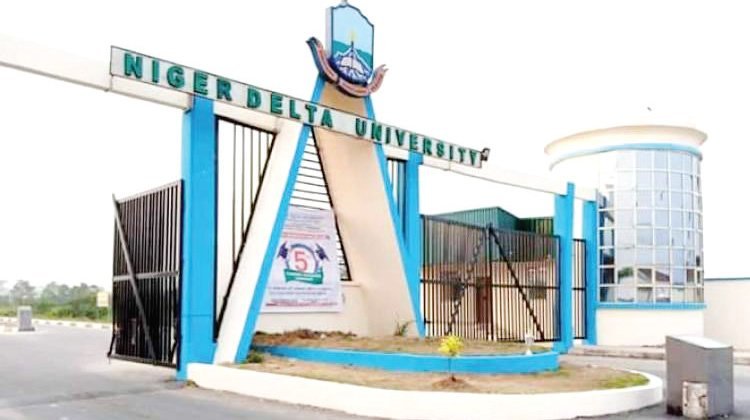
A picture of Niger Delta University
Private UniversityState UniversityUniversity

Universities That Wear Uniforms in Nigeria: 2025/2026 List, Costs, and Dress Code Policies

by Maryam A January 4, 2026
written by Maryam A

While the university experience is often synonymous with personal freedom, several Nigerian institutions—both public and private—have implemented mandatory uniforms or strict professional dress codes. As of 2026, these policies have become even more formalized to curb “indecent dressing” and enhance campus security.

Below is the verified and updated list of universities that require students to wear uniforms or adhere to a mandatory departmental dress code.

Continue Reading

January 4, 2026 0 comments
0 FacebookTwitterPinterestWhatsappTelegramCopy LinkEmail
A picture of a classroom in the university
Federal UniversityPrivate UniversityState UniversityUniversity

University Grading System in Nigeria: A Comprehensive Guide (2026 Update)

by Maryam A January 3, 2026
written by Maryam A

Everything You Need to Know About the Grading System in Nigeria as Approved by the NUC

Nigerian universities rank the students’ overall performance in bachelor’s degree programmes using a degree classification system.

This degree classification determines the overall performance of students throughout their duration of the study. It is also relevant for employment and admission prospects.

The National Universities Commission (NUC) approved a new grading system for universities. Rather than the five-point Grading Scale for Classification of Degrees, NUC directed all universities in 2017 to adopt the four-point scale.

This increases the GPA requirements for graduation, thereby eliminating the ‘PASS’ class of degrees.

Under the four-point system, scores are graded using the letter grades:

A: (70 and above)- 4

B: (60- 69%)- 3

C: (50- 59%)- 2

D: (45-49%)- 1

E: (40-44%)- 0

grading system in nigerian universities

The four-point grading scale for degrees’ classification is as follows:

First Class Honours: 3.5 – 4.00

Second Class Honours (Upper Division): 3.0 – 3.49

Second Class Honours (Lower Division): 2.0 – 2.99

Third Class Honours: 1.0 – 1.99

Students with less than 1.0 CGPA will not be awarded a degree.

grading system in nigerian universities

The National Universities Commission (NUC) directed universities to implement the five-point grading system against four-point.

The five-point grading scale for degrees’ classification is as follows:

First Class: 4.50 – 5.00

Second Class Honours (Upper Division): 3.5 – 4.49

Second Class Honours (Lower Division): 2.40 – 3.49

Third Class Honours: 1.50 – 2.39

Pass degree: 1.00 – 1.49

In 2017, the Directors of Academic Planning reached a decision that universities should adopt the 4-point grading system.

Vice Chancellors were, however, instructed to revert to the five-point scale from the 2018/2019 academic session.

The grading systems implemented across universities in the country have not been uniformed.

NUC explained that the grading system was changed to five-point because the four-point made it easier for students to graduate with First Class and several universities found it challenging to ensure that students acquire the average class of degree.

Latest NUC Leadership (2026)

As of late 2024, Professor Abdullahi Yusufu Ribadu assumed office as the substantive 9th Executive Secretary of the NUC. Under his leadership, the commission is focused on the full implementation of the CCMAS and upgrading university infrastructure to match international trends.

Useful External Links

  • National Universities Commission (NUC): The official regulatory body for universities in Nigeria.

  • NUC CCMAS Portal: Detailed curriculum and grading standards for all academic disciplines.

  • Joint Admissions and Matriculation Board (JAMB): For information on university entry requirements.

5-Point Grading System in Nigerian Universities

The 5-point grading system is the most commonly used grading system by Nigerian universities.

Percentage Letter GPA
70-100 A 5
60-69 B 4
50-59 C 3
45-49 D 2
40-44 E 1
0-39 F 0

Here are the ranges of CGPA for the five-point scale:

First Class: 4.50 – 5.00

Second Class Honours (Upper Division): 3.5 – 4.49

Second Class Honours (Lower Division): 2.40 – 3.49

Third Class Honours: 1.50 – 2.39

Pass degree: 1.00 – 1.49

Differences between the Old and New Grading System in Nigerian Universities

The difference between the old and new grading systems in Nigerian universities is in the classification of degrees.

While the four-point scale starts with 4 and doesn’t award a degree to CGPA less than 1.0, the five-point scale treats the ‘A’ grade as 5.

The CGPA Grading System in Nigerian Universities: How is it Done?

The CGPA scale in universities calculates a student’s performance in assessments and semester examinations for every course enrolled in.

A student’s overall performance in courses is classified into letter grades (A, B, C, D, E, and F).

These letter grades represent the range of scores. Each letter grade has a grade point.

The table below explains the grade point:

Score Letter Grade Grade Point (GP)
70% and above A 5
60-69 B 4
50-59 C 3
45-49 D 2
40-44 E 1
0-39 F 0

Here’s how to calculate the Grade Point Average (GPA)

Every subject has a number of Credit Units (CU). To obtain the Quality Points (QP), the Credit Units (CU) will be multiplied by the Grade Point (GP) for a particular course.

For instance, if a student scores 75% in a 3 Credit Unit course, the Quality Points for the student will be derived by multiplying the Grade Point (B= 4) by the number of Credit Unit, i.e., 3 x 4 = 12.

The Grade Point Average (GPA) is derived through the following way: Divide the Total Quality Point (TQP) by the Total Credit Unit (TCU) for the semester.

For example, if a student earns 54 Quality Points, in a semester, for 18 Credit Units, the Grade Point Average (GPA) will be 54/18 = 3.0.

The Cumulative Grade Point Average (CGPA) can be derived by adding the Total Quality Points (TQP) for all semesters and dividing it by the Total Credit Units (TCU) for all semesters.

For example, the CGPA of a student, who earned a Quality Point of 54, in a semester, for 18 Credit Units and earned a Quality Point of 62, in the second semester, for 20 Credit Units, will be calculated as thus:

CGPA= (54 + 62) / (18 + 20) = 116/38 = 3.05

grading system in nigerian universities

Differences between CGPA and GPA Grading System

Grade Point Average (GPA) is calculated by dividing the total number of Grade Points by the number of Course Units in a semester.

GPA and CGPA both refer to a student’s average grades. However, GPA is for shorter periods, such as the average for a semester.

The cumulative grade point average (CGPA) is a measure of a student’s overall academic performance.

This means that all grades from all semesters are included. Your Class of Honor is determined by your CGPA– for example, First Class, Second Class Upper, and so on.

How Many Years does University Education Lasts?

University education is usually run for 4-5 years. The duration of the programme depends on the course. However, courses such as Medicine and Law are studied for more than five years.

The length of study depends on the course and the mode of entry.

  • 4-Year Courses: Most Social Sciences, Arts, and Management courses (e.g., Economics, Mass Communication, Computer Science).

  • 5-Year Courses: Engineering, Agriculture, Pharmacy, Law, and Medical Laboratory Science.

  • 6-Year Courses: Medicine and Surgery (MBBS) and Veterinary Medicine.

  • Direct Entry (DE): Students with a Diploma or NCE enter at the 200 Level, reducing their study time by one year.

          5 Year Courses

Here are some of the courses that are run for five years in the university:

  • Electrical and Electronic Engineering
  • Agricultural Engineering
  • Mechanical Engineering
  • Civil Engineering
  • Food Science and Technology
  • Estate Management
  • Pharmacy
  • Soil Science
  • Crop Science

          4 Years Course

Here are some of the courses that are run for four years in the university:

  • Fine and Applied Arts
  • Mass Communication
  • Archeology
  • Banking and Finance
  • Economics
  • Marketing
  • Health and Physical Education
  • Medical Laboratory Sciences
  • Computer Science
  • Mathematics
  • Accountancy
  • Statistics
  • Political Science

          Direct Entry Students

Direct Entry (DE) students usually study four year degree programmes for three years and five year degree programmes for four years. This is because they joined regular students in their 200 level.

Classes of Degree in Nigeria and their Respective CGPAs

First Class: 4.50 – 5.00

Second Class Honours (Upper Division): 3.5 – 4.49

Second Class Honours (Lower Division): 2.40 – 3.49

Third Class Honours: 1.50 – 2.39

Pass degree: 1.00 – 1.49

January 3, 2026 0 comments
0 FacebookTwitterPinterestWhatsappTelegramCopy LinkEmail
Lasu gate
State UniversityUniversity

2025/2026 LASU Online Admission Screening: Regular with Entrepreneurship (Stream 2) FOR 100 LEVEL

by ajibolaaina January 3, 2026
written by ajibolaaina

A.  APPLICATION

Applications are officially invited from qualified candidates for the Lagos State University 2025/2026 Admission Screening Exercise. This specific “Stream 2” program allows students to earn their traditional degree alongside a Certificate in Entrepreneurship.

A. Core Admission Details

  • Mandatory Requirement: This screening is a prerequisite for admission into any B.Sc./B.A. program with Entrepreneurship.

  • Tuition Fee: The fee for “Regular with Comprehensive Entrepreneurship” is ₦150,000.00 per annum (fixed for the duration of the course).

  • Acceptance Fee Commitment: Successful candidates are often required to pay a 50% commitment fee of the tuition to secure their slot on a first-come, first-served basis.

B. Eligibility for 2025/2026

  1. UTME Cut-off Mark: Candidates must have chosen LASU as their First Choice and scored a minimum of 195 in the 2025 UTME.

  2. Age Requirement: Candidates must be at least 16 years of age by September 30, 2025.

  3. Lagos State Indigenes: Candidates of Lagos origin must have completed the Independent Indigeneship Verification (IIVC) process. Their status will be automatically validated on the portal.

  4. O’Level Requirements: Five (5) O’Level credits (including English and Mathematics) in a maximum of two sittings.

    • Note: Medicine (MBBS) and Dentistry (BDS) still require one sitting only.

Candidates who participated in the First Round Online Admission Screening Exercise and have not been offered provisional admission can also apply by re-screening.

C. Updated List of Accredited Courses

For the 2025/2026 session, LASU has expanded its faculties. Candidates can apply for programs in the following areas:

  • Arts: Linguistics, Peace Studies, Portuguese/English, and more.

  • Communication & Media Studies: Now a full faculty (formerly School of Communication).

  • Engineering: Now includes Industrial Engineering and Civil Engineering.

  • Environmental Sciences: A new faculty featuring Architecture, Estate Management, and Surveying.

  • Management Sciences: Now includes Taxation.

  • Science: Features the new Science Laboratory Technology (SLT) program.

  • College of Medicine: Dentistry, Nursing, Pharmacy, and Physiotherapy.

LIST OF ACCREDITED COURSES (Regular students)

Candidates should note that ONLY the accredited courses listed below are available for the 2025/2026 Academic Session. Therefore, candidates can only apply for ANY of the under-listed courses for which they possess relevant requirements for admission.


S/N
FACULTY DEPARTMENT
1. ARTS –  Arabic Language    

–  Christian Studies      

–  English Language

–  French Language

–  History & International Studies       

–  Islamic Studies         

–  Music                      

–  Peace Studies

–  Philosophy

–  Portuguese / English

–  Theatre Arts

–  Yoruba

2. EDUCATION –  Arabic Education     

–  Biology Education   

–  Business Education

–  Chemistry Education            

–  Christian Religious Studies Education          

–  Computer Science Education

–  Early Childhood Education

–  Economics Education

–  Educational Management

–  Educational Technology

–  English Education     

–  French Education

–  Geography Education

–  Guidance & Counselling

–  Health Education

–  History Education    

–  Islamic Studies Education     

–  Mathematics Education       

–  Physical & Health Education

–  Physics Education    

–  Political Science Education

–  Yoruba Education    

3. SCHOOL OF AGRICULTURE – Agriculture
4. MANAGEMENT SCIENCES – Accounting

– Banking & Finance

– Business Administration

– Industrial Relations & Personnel Management

– Insurance

– Local Government Development & Administration

– Management Technology

– Marketing

– Public Administration

5. SCHOOL OF COMMUNICATION – Mass Communication
6. SCIENCE – Biochemistry

– Botany

– Chemistry

– Computer Science

– Fisheries & Aquatic Biology

– Mathematics

– Microbiology

– Physics

– Zoology

7. SOCIAL SCIENCES – Economics

– Geography & Planning

– Political Science

– Psychology

– Sociology

8. SCHOOL OF TRANSPORT – Transport
9. ENGINEERING – Aeronautic & Astronautic Engineering

– Chemical & Polymer Engineering

– Electronics & Computer Engineering

– Mechanical Engineering

D. 2026 Online Screening Point Grading System

LASU uses a digital point system combining your UTME and O’Level results. No physical Post-UTME exam is required.

O’Level Grade Point Value
A1 10
B2 9
B3 8
C4 7
C5 6
C6 5

Aggregate Formula: $\text{Aggregate Score} = (\frac{\text{UTME Score}}{8}) + \text{O’Level Points}$ Maximum obtainable points: 100.

E. How to Apply (2025/2026 Procedure)

  1. Visit the LASU Official Website.

  2. Navigate to Student > New Applicants > UTME/DE Screening.

  3. Click on UTME Candidate Login.

  4. Enter your JAMB Registration Number and Surname.

  5. Payment: Generate a transaction ID and pay the ₦2,000 screening fee (plus any ICT service charges) via the automated Remita/Payment portal.

  6. Screening Form: After payment, return to the dashboard and select “Regular with Entrepreneurship” from the drop-down menu.

  7. Upload Credentials: Upload your JAMB result slip and O’Level result(s). Ensure each file is a PDF not exceeding 30KB.

Important Links & Contacts

  • LASU Admission Portal

  • JAMB iBASS (Course Requirements)

  • Support Email: screeningsupport@lasu.edu.ng

📋 2025/2026 Screening Document Checklist

Preparing for the 2025/2026 LASU Online Screening requires careful attention to detail, especially regarding the strict digital file constraints. The portal is notorious for rejecting files that are even slightly over the 30KB limit.

Below is your essential document checklist and a “cheat sheet” for compressing your files to ensure a smooth application.

📋 2025/2026 Screening Document Checklist

Before you log in to the LASU Service Portal, ensure you have digital copies of the following:

  1. JAMB Result Slip: The official 2025 UTME result notification showing your score (Min. 195 for Stream 2).

  2. O’Level Result(s): WAEC, NECO, or NABTEB statements of result or certificates.

    • Note: If you are using two sittings, you must have both results ready as separate files.

  3. Recent Passport Photograph: While not always required for the initial screening step, it is vital for the LACACA (Central Admissions Clearance) stage that follows.

  4. IIVC Clearance Certificate: For Lagos State Indigenes only. You must have your validated clearance number from the Indigeneship Committee.

🛠️ The “Under 30KB” Compression Strategy

A standard PDF of a scanned result is usually 200KB to 1MB. To get this down to 30KB without making the text unreadable, follow these steps:

Method 1: The “SmallPDF” or “iLovePDF” Method

  1. Go to a free tool like iLovePDF or SmallPDF.

  2. Upload your document and select “Extreme Compression” (Less quality, high compression).

  3. If the result is still over 30KB, try converting the PDF to a JPG, resizing the image to about 800px width, and then converting it back to a PDF.

Method 2: The “Microsoft Word” Hack

  1. Open a blank Word document and insert your result as a picture.

  2. Right-click the image and select “Compress Pictures.”

  3. Choose “E-mail (96 ppi): minimize document size for sharing.”

  4. Save the Word file as a PDF, ensuring you select “Minimum size (publishing online)” in the save options.

Warning: If your uploaded result is blurry or unreadable due to over-compression, the admission office may flag your application. Always double-check the “Temporary Self-Screening Report” after uploading to see if your details are clear.


⚠️ Important 2026 Deadlines

  • Portal Re-opening: The second round for Stream 2 (Regular with Entrepreneurship) typically remains open for a short window after the first batch merit list is released.

  • JAMB CAPS: You must upload your O’Level results to the JAMB CAPS Portal simultaneously, or LASU will be unable to offer you admission even if you pass the screening.

LIST OF ACCREDITED COURSES (Regular student with Comprehensive Entrepreneurship)

Candidates should note that ONLY the accredited courses listed in A. above are available in the SPECIAL PROGRAMME for the 2025/2026 Academic Session except all courses in the COLLEGE OF MEDICINE.

LIST OF ENTREPRENEURIAL CERTIFICATE COURSES OFFERED

In addition to the B. Sc. / B. A. Courses offered in item B. above, Certificates will be awarded in the following Entrepreneurial Courses in the Regular with Comprehensive Entrepreneurship Programme.

1.    Access Control Installation and Management

2.    Animal Husbandry (Snail breeding, Grass Cutter breeding)

3.    Awards, Packaging and Screen Printing

4.    Bead making

5.    Block making industry (Vibrated or engine molds/Hand molds

6.    Build, Installation and Repair of Inverter/Solar Panel

7.    Building Drawing

8.    Building Applications in PHP

9.    Cake Baking, Snacks, Sugar Craft (Free Hand Modelling)

10. CCTV Camera Installation and Management

11. Certificate in Aquatic food processing

12. Certificate in Aquatic Product Business

13. Certificate in Artisanal Fisheries Operation and Management

14. Certificate in Brood-stock development and Management

15. Certificate in Environmental management in fisheries and aquaculture

16. Certificate in Fish Farm Cluster and Terminal Management

17. Certificate in Fish farm clusters and fish

18. Certificate in Fish farming business

19. Certificate in Fish feed manufacturing

20. Certificate in Fish Fingerling Production, Marketing and Distribution

21. Certificate in Fish health management

22. Certificate in Fisheries and Aquaculture Value Chain

23. Certificate in Industrial Fisheries Operation and Management

24. Certificate in Local and International fish business

25. Certificate in Ornamental fish business

26. Certificate in Public, private Partnership in fisheries and Aquaculture (PPP)

27. Certificate in Shrimp and Prawn farming business

28. Certificate in Water quality analysis and management

29. Certification of Trade Apprentice

30. Coconut value chain

31. Computer & Laptop repairs & Maintenance, Networking Mobile Phone repairs and Maintenance

32. Concrete Mixer Handling

33. Courier and logistics Management

34. Crop Farming

35. Data Analysis AND Data Processing (Excel & SPSS)

36. Database Management Essentials

37. Data Recovery Specialist/Technician

38. Decoders and Internet Marketing

39. Digital Forensic Specialist/Technician

40. Digital Marketing

41. Distribution Channel & Logistics Management

42. Drama and Entertainment

43. Draughtmanship

44. Entrepreneurship Training in Beekeeping

45. Ethical Hacking and Cyber Security Specialist/Technician

46. Event Management & Hall Decoration

47. Event planning and Management

48. Fiber Optic Cable Installation and Management

49. Food processing and cake production

50. Garment Construction, Pattern Drafting, Bridal Designs and Evening Wears

51. Home Electronics (Domestic appliances) Repairs and management

52. Hotel Management

53. Import and Export Processing Entrepreneurship

54. Interlocking/paving stones for private and commercial premises

55. Laptop/ Desktop Handset Repairs

56. Leather works

57. Make-ups and cosmetics

58. Packaging and Marketing Entrepreneurship

59. Photograph/Image Editing

60. Photography

61. POP (Plaster of Paris) for buildings construction

62. Real Estate Entrepreneurship

63. Security Operations and Management

64. Server Technician (Installations and Management)

65. Soap, Detergent and Toiletries Production

66. Structured Cabling & Wireless Installation and Management

67. Tailoring and Fashion Design

68. Tourism Management

69. Training and Teaching of Bread Making

70. Training in Fibre-Reinforced Plastic Tanks Construction

71. Training in Paint Making (Emulsion/ Texture Coatings) And Allied Products

72. Training on Borehole Drilling and Water Treatment

73. Training on Solar Energy System, Design, Installation and Maintenance

74. Vegetable Production. Maize farming, Cassava farming)

75. Videography, Finishing School Generally

76. Water Treatment and Packaging

77. Website Development

78. Welding, Metal Works and Fabrication

79. Writing and Publishing

Old  METHOD OF APPLICATION for 2021/2022

            2021/2022 LASU POST UTME ONLINE PAYMENT REGISTRATION PROCEDURE

1.             Prospective Candidates will visit www.lasu.edu.ng

2.             Point to Student, then click on New Applicants

3.             Click on UTME/DE Screening (https://services.lidc.lasu.edu.ng/admissionscreening)

4.             Click on UTME CANDIDATE LOGIN

5.             Enter your UTME REGISTRATION NUMBER, your SURNAME and click on SUBMIT.

6.             Click “Make Payment (Admission Screening)” button.

7.             On the Payment Page

–  Supply Jamb Registration Number

–  Select  “Admission Screening Fee [ ICT Management Inclusive]” as Description

–  Select “Ojo” as Campus

–  Select “Student”  As Category

8.             After Successful Payment; return to your dashboard.

9.             Click Start Admission Screening

10.   At this time, your basic bio-data information will be displayed. Then, select REGULAR STUDENT WITH ENTREPRENURSHIP ADMISSION SCREENING from the drop-down menu: “Type of Screening”

11.   Supply your Transaction ID used for Payment.

12.    Once you have completed the application, print a copy of the Temporary Self-Screening Report. Please NOTE that all Screened Candidate must login into their Admission Screening Portal to Print their Final Self-Screening Report.

13.   Candidate can repeat the above procedure if there is need to update/effect correction(s) on the earlier supplied records. With this, the candidate will be required to make payment for subsequent screening attempts.

  1.  ONLINE SELF-SCREENING FORM FOR ALL CANDIDATES

STEP I

– After successful payment for LASU 2021/2022 Admission screening exercise, return to (https://services.lidc.lasu.edu.ng/admissionscreening)

STEP II

– Use your UTME Registration Number AND SURNAME to login to the LASU Online Screening Platform and suppply your Transaction ID.

STEP III

– Carefully fill in your personal details as required
– Save and proceed
– Carefully enter your UTME details
– Scan and Upload UTME result slip NOT MORE THAN 30KB (PDF)
– Save and proceed
– Select number of O’ level sitting(s)
– Scan and Upload O’ Level result slip(s) NOT MORE THAN 30KB (PDF)
– Save and proceed
– Input required O’ Level details
– Save and proceed

Requirements

–  Candidates must possess Five (5) O’ Level Credits in subjects relevant to their desired course of study at not more than Two (2) sittings, except Medicine and Dentistry that require ONLY 1 sitting.

–  Candidates who wish to study any Engineering Course and wish to use Two (2) sitting of O’Level Results must possess Six (6) O’ Level Credits in Mathematics, Physics, Chemistry, English Language, one other Science subject and any other subject.

–  Aeronautic and Astronautic Engineering require a Credit pass in Further Mathematics.

–  Credit in English Language is compulsory for admission into all courses in Lagos State University.

–  Candidates must ENSURE they upload their O’Level results on JAMB CAPS before the closure of the Admission Screening Exercise

–  Candidates of Lagos State Origin MUST have proved their claims before the Independent Indigeneship Verification Committee (IIVC) set up by the Lagos State University, as their claim will be automatically validated before they can proceed with the Online Screening.

Note that any examination taken after July 2021 is not acceptable.

STEP IV

– Carefully preview all details supplied and CERTIFY that they are correct
– CHECK THE “I CERTIFY” BUTTON if you agree with all details as displayed in the Preview.
– By ticking the “I Certify” button, the Candidate confirms that the screening will be premised ONLY on the supplied information as the screening decision is final. If you do not agree to the stated terms you will not be permitted to go beyond this point .
– Click the continue button

STEP V

–  After submission and successful completion of the online screening, you will be redirected to the Screening Homepage
– Enter your UTME REGISTRATION NUMBER then click DOWNLOAD RESULT to generate your SCREENING report.
  1.  ONLINE SCREENING GRADING FOR ALL CANDIDATES

·         The Screening of Candidate(s) will be based on Point Grading System, using the UTME Score and SSCE (or equivalent) Grades in Five (5) BEST RELEVANT subjects to Candidate’s Choice of Course

·         The relevant subjects are obtainable from 2021 JAMB brochure available online at www.jamb.gov.ng or https://jamb.gov.ng/ibass

·         Candidates are advised to visit JAMB website to study the O’ Level subject requirements for their Course of choice before participating in the online Admission Screening

·         The Point grading system is as follows:

OLEVEL SSCE (WAEC/NECO/NABTEB) GRADING POINTS
GRADE POINT
A1 10
A2 (B2) 9
B3


A3 (B3)

8
C4 7
C5 6
C6 5
TOTAL OBTAINABLE 50 %


Candidates should know that both payment and registration/updating for the second round has commenced.
All Online Screening complaints should be channeled to screeningsupport@lasu.edu.ng

January 3, 2026 0 comments
0 FacebookTwitterPinterestWhatsappTelegramCopy LinkEmail
Doctor with stethoscope holding human brain MRI imaging in medical office
University

Cost of Studying Neurosurgery in Nigeria: Fees, Duration, and Salaries (Updated 2026)

by Maryam A January 3, 2026
written by Maryam A

Becoming a neurosurgeon is arguably the most rigorous medical journey in Nigeria. As of 2026, the path has become even more specialized with new accreditation standards from the West African College of Surgeons (WACS) and the National Postgraduate Medical College of Nigeria (NPMCN).

Here is the updated guide on the cost, duration, and requirements for studying Neurosurgery in Nigeria.

What is Neurosurgery?

Neurosurgery is the surgical treatment of the nervous system.

Neurosurgery, also known as brain surgery, is a medical specialty that focuses on the prevention, diagnosis, surgical treatment, and rehabilitation of disorders affecting any part of the nervous system, including the brain, spinal cord, central and peripheral nervous systems, and cerebrovascular system.

Most people associate neurosurgery with brain surgery, but it is actually more than that.

It is the medical specialty concerned with the diagnosis and treatment of patients suffering from injuries to, or diseases/disorders of, the brain, spinal cord, and spinal column, as well as peripheral nerves in all parts of the body.

Adult and pediatric patients are both treated in the field of neurosurgery.

A neurological surgeon may provide surgical and/or non-surgical care depending on the nature of the injury or disease.

What is the Role of a Neurosurgeon?

Medicine doctor team meeting and analysis.

A neurosurgeon is a doctor who specializes in brain surgery.

Neurosurgeons are medically trained neurosurgical specialists who can help patients with back and neck pain, as well as a variety of other illnesses ranging from trigeminal neuralgia to head injury and Parkinson’s disease.

Neurosurgeons manage neurological disorders both surgically and non-surgically (i.e., prevention, diagnosis, evaluation, treatment, critical care, and rehabilitation).

Because neurosurgeons have extensive training in the diagnosis of all neurological diseases, they are frequently consulted by emergency room doctors, neurologists, internists, family practitioners, and osteopaths.

Is Neurosurgery Studied in Nigeria?

Yes, neurosurgery is studied in Nigeria, but not at bachelor’s level.

You cannot study Neurosurgery at the undergraduate level. In Nigeria, it is a postgraduate residency program. To begin, you must first become a licensed Medical Doctor (MBBS).

Before you can go ahead with the training, the Medical and Dental Council of Nigeria (MDCN) must certify you as a medical practitioner.

Following that, you will be required to take and pass a type of medical exam known as ‘Primaries‘ before applying for residency training in Neurosurgery.

Another 6 to 7 years are required to be certified as a specialist, consultant, or professional in Neurosurgery.

Furthermore, neurosurgery is governed by the West African College of Surgeons (WACS) rather than the Nigerian Universities Commission (NUC).

In Nigeria, it takes a total of 15 years to become a neurosurgeon: 6 years in medical school, 1 year of mandatory housemanship, 1 year of mandatory National Youth Service Corps (NYSC), and 7 years of residency training in any of the accredited teaching hospitals or federal medical centres.

The Journey (15-Year Timeline)

Becoming a Consultant Neurosurgeon in Nigeria typically follows this timeline:

  1. Medical School (6 Years): Obtain your MBBS degree.

  2. Internship/Housemanship (1 Year): Paid clinical rotation at an MDCN-accredited hospital.

  3. National Youth Service (NYSC) (1 Year): Mandatory service to the nation.

  4. Primary Fellowship Exam: You must pass the “Primaries” in Surgery conducted by WACS or NPMCN.

  5. Residency Training (6–7 Years): Specialized training in an accredited neurosurgical unit.

    • Part I (Membership): 30–36 months of general surgical and basic neurosurgical rotations.

    • Part II (Fellowship): 36–48 months of intensive neurosurgery focus, concluding with a dissertation and final exams.

Accredited Neurosurgery Training Centers (2026)

As of 2026, the number of accredited centers has grown. Key training institutions include:

Institution Location Accreditation Status
University College Hospital (UCH) Ibadan Full
Lagos University Teaching Hospital (LUTH) Lagos Full
Memfys Hospital for Neurosurgery Enugu Only Private Center with Full Accreditation
University of Nigeria Teaching Hospital (UNTH) Enugu Full
Ahmadu Bello University Teaching Hospital (ABUTH) Zaria Full
Lagos State University Teaching Hospital (LASUTH) Lagos Full
Aminu Kano Teaching Hospital (AKTH) Kano Full
Usmanu Danfodiyo University Teaching Hospital (UDUTH) Sokoto Full

The accredited teaching hospitals that train doctors to become neurosurgery specialists are as follows:

  1. Usmanu Danfodiyyo Teaching Hospital (UDUTH), Sokoto, Sokoto State
  2. University of Benin Teaching Hospital (UBTH), Benin City, Edo State
  3. University of Nigeria Teaching Hospital (UNTH), Enugu.
  4. Ahmadu Bello Teaching Hospital (ABUTH), Zaria, Kaduna
  5. University College Hospital (UCH), Ibadan, Oyo State.
  6. Obafemi Awolowo Teaching Hospital (OAUTH), Ife, Osun State.
  7. Lagos University Teaching Hospital (LUTH), Lagos State.
  8. University of Port Harcourt Teaching Hospital (UPTH), Port Harcourt, Rivers State (UPTH has partial accreditation)
  9. Memfys Hospital for Neurosugery, Enugu (This is the only privately-owned hospital that has been given full accreditation by the West African College of Surgeons (WACS), in Nigeria, for residency training.
  10. Aminu Kano Teaching Hospital (AKTH), Kano.

How Many Years does it Take to Study Neurosurgery in Nigeria?

Doctor pointing at MRI of human brain on the light box to demonstrate anatomy

In Nigeria, it takes a total of 15 years to become a neurosurgeon: 6 years in medical school, 1 year of mandatory housemanship, and 1 year for the mandatory National Youth Service Corps (NYSC), and 7 years of residency training in any of the accredited teaching hospitals or federal medical centres.

Cost of Training to be a Neurosurgeon

The “cost” is divided into two phases: Undergraduate (MBBS) and Postgraduate (Residency).

1. Undergraduate Phase (MBBS)

  • Public Universities: Tuition ranges from ₦150,000 to ₦500,000 per session.

  • Private Universities: Schools like Nile University or Babcock can cost between ₦3,000,000 and ₦6,500,000 per session.

2. Postgraduate Phase (Residency)

In Nigeria, residency is a paid job, not a traditional “school” where you pay tuition. However, there are significant costs:

  • Exam Fees: WACS/NPMCN exams (Primaries, Part I, Part II) cost between ₦150,000 and ₦300,000 per attempt.

  • Update Courses: Mandatory revision courses cost approximately ₦50,000 to ₦100,000 each.

  • External Rotations: Many residents opt for a 6-month international rotation (e.g., in South Africa or the UK), which can cost $5,000 – $15,000 if not sponsored.

Salary and Compensation (2026 Estimates)

Neurosurgery remains the highest-paid surgical specialty.

  • Resident Doctor (Trainee): Earns between ₦350,000 and ₦550,000 monthly (depending on level and hazard allowance updates).

  • Entry-Level Consultant: Earns between ₦800,000 and ₦1,200,000 monthly in government hospitals.

  • Experienced Private Consultant: Can earn upwards of ₦3,000,000 to ₦7,000,000 monthly depending on the number of surgeries performed.

Relevant External Links

  • West African College of Surgeons (WACS): For official residency curricula and exam schedules.

  • Medical and Dental Council of Nigeria (MDCN): To verify licensed practitioners and accredited medical schools.

  • Nigerian Academy of Neurological Surgeons (NANS): The professional body for neurosurgeons in Nigeria.


January 3, 2026 0 comments
0 FacebookTwitterPinterestWhatsappTelegramCopy LinkEmail
University

The Ultimate Guide to Applying for a Master’s Degree at the University of Ibadan

by ajibolaaina April 30, 2025
written by ajibolaaina

The University of Ibadan (UI), located in Ibadan, Nigeria, is a prestigious institution known for its excellence in education and research. As the premier university in Nigeria, UI offers a wide range of postgraduate programmes across various disciplines. Pursuing a master’s degree at the University of Ibadan can be a transformative experience, providing students with the opportunity to deepen their knowledge, enhance their skills, and advance their careers. This comprehensive guide aims to walk you through the process of applying for a master’s degree at UI, from exploring available programmes to successfully enrolling as a postgraduate student.

Continue Reading

April 30, 2025 0 comments
0 FacebookTwitterPinterestWhatsappTelegramCopy LinkEmail
master-degree
University

How to Apply for a Master’s Degree with an HND at Kwara State University in 2023/2024

by ajibolaaina April 22, 2024
written by ajibolaaina

Kwara State University (KWASU) offers a wide range of postgraduate programs designed to cater to the diverse needs of students seeking to advance their careers through higher education. Pursuing a master’s degree is a crucial step for individuals looking to deepen their knowledge, enhance their skills, and open up new opportunities in their chosen fields. While many postgraduate programs require a bachelor’s degree, holders of a Higher National Diploma (HND) can also fulfill their dreams of obtaining a master’s degree at KWASU.

Continue Reading

April 22, 2024 0 comments
0 FacebookTwitterPinterestWhatsappTelegramCopy LinkEmail
uk-universites-that-accept-hnd
University

Top 10 UK Universities That Accept HND for Masters Degrees in 2024

by ajibolaaina April 22, 2024
written by ajibolaaina

A Higher National Diploma (HND) is a highly respected qualification in the United Kingdom, often considered equivalent to the first two years of a bachelor’s degree. Many aspiring students with HNDs seek to further their education by pursuing master’s degrees in their chosen fields. Fortunately, several UK universities have recognized the value of HNDs and offer inclusive admission policies for holders of these qualifications.

In this article, we will explore the top 10 UK universities that accept HNDs for master’s programs, the benefits of studying a master’s with an HND, and the requirements for a successful application. We will also discuss the various programs available, funding opportunities, and tips to help you navigate the application process.

Continue Reading

April 22, 2024 0 comments
0 FacebookTwitterPinterestWhatsappTelegramCopy LinkEmail
UNIABUJA notice to SIWES students
University

AAUA admission list for 2021/2022 out on JAMB CAPS

by ajibolaaina April 8, 2022
written by ajibolaaina

The Adekunle Ajasin University Admissions List for the 2021/2022 academic session has been announced. Applicants who participated in the Post-UTME in the academic year 2021/2022 are thus informed that they can proceed to verify if their names are on the Provisional Admission list of successful candidates.

The list of accepted applicants has been made available online through the JAMB CAPS system. Candidates are required to complete the method outlined below in order to be checked;

Instructions on How to Check the List on JAMB CAPS

To access your dashboard, go to: https://www.jamb.gov.ng/Efacility and log in using your registered email address and password to access your account.

  • To check your admission status, click on the ‘Check Admission Status‘ button.
  • To gain access to your CAPS, click on ‘Access My CAPS‘.
  • To find out if you have been offered admission, go to ‘Admission Status‘ and click on it.
  • Following this, candidates who have been given admission should proceed to click on “ACCEPT” or “REJECT” to indicate whether they have accepted or rejected the admission offer.

You are urged to continuously check your application status, since it is possible that it will change at any time.

Please keep in mind that selecting “REJECT” indicates that the candidate(s) has/have refused the offer of admission.

Congratulations to all who were accepted!!!

April 8, 2022 0 comments
0 FacebookTwitterPinterestWhatsappTelegramCopy LinkEmail
Director General of the NYSC advises corps members against criticizing government on social media
University

Director General of the NYSC advises corps members against criticizing government on social media

by ajibolaaina April 8, 2022
written by ajibolaaina

Maj.-Gen. Shuaibu Ibrahim, Director-General of the National Youth Service Corps (NYSC), has advised corps members against criticizing government policy on social media.

In a speech delivered on Wednesday, April 6, during the opening of the senior staff quarters at the NYSC Permanent Orientation Camp in Ikare-Akoko, Ondo, Ibrahim issued the warning.

“I’d want to caution you against utilizing social media to criticize government policies and programs.

Instead, you should enable all of the things you’ve learned during the orientation program to mold you into change vanguards and the youngsters of the new Nigeria, who will be the ones to pull the country out of the quagmire of problems it’s now suffering.

I want to encourage you, my dear patriotic children serving in the fatherland, to give your all to the development of this country, wherever you may find yourself, and to continue to work tirelessly towards the achievement of Nigeria’s unity and integration, which the NYSC was established to promote.

April 8, 2022 0 comments
0 FacebookTwitterPinterestWhatsappTelegramCopy LinkEmail
Newer Posts
Older Posts
  • Business
  • college of Edu
  • Education
  • Federal Polytechnic
  • Federal University
  • FUTA
  • MBA
  • Other Institutions
  • Polytechnic
  • Private University
  • Scholarship
  • State Polytechnic
  • State University
  • Uncategorized
  • University

IMPORTANT LINKS

  • About Us
  • Contact Us
  • Privacy Policy
Footer Logo
  • About Us
  • Contact Us
  • Privacy Policy

@2020 - All Right Reserved. Designed and Developed by Wapzola


Back To Top
School Reviews by Real Students.
  • Home
  • University
    • Federal University
    • State University
    • Private University
  • Polytechnic
    • State Polytechnic
    • Federal Polytechnic
  • college of Edu
  • Other Institutions
    • Scholarship
    • Business
    • MBA
  • Privacy Policy
  • About Us
  • Contact Us