Are you feeling the “exam jitters” as you prepare for your Business Analysis certification? Whether you are tackling the BCS Foundation Certificate or aiming for the IIBA’s CBAP, the key to success isn’t just reading the manual—it’s testing your knowledge in real-world scenarios.
In today’s post, we’re breaking down 20 essential questions that frequently appear in BA exams. We’ll look at the “why” behind the answers so you can walk into that exam room with total confidence. Plus, don’t miss our Free BA Cheat Sheet at the end of the post!

Mbaken-Business-Analysis-Exam-Questions
Here is a quick-reference guide to the key frameworks and techniques discussed in the practice questions. Understanding these is essential for passing the BCS Foundation or IIBA exams.
Also check out: How I Got My MBA Cheap: 5 Accredited Online MBA Programs for $5,000 or Less
Core BA Frameworks & Techniques:
| Technique | Category | Purpose |
| VMOST | Strategy | Analyzes internal strategy (Vision, Mission, Objectives, Strategy, Tactics). |
| SIPOC | Process | A high-level view of Suppliers, Inputs, Process, Outputs, and Customers. |
| CARDI | Risk/Project Mgmt | A log for Constraints, Assumptions, Risks, Dependencies, and Issues. |
| MOSCOW | Prioritization | Categorizes requirements into Must have, Should have, Could have, and Won’t have this time. |
| Power/Interest Grid | Stakeholders | Maps stakeholders to determine the best engagement strategy (e.g., “Keep On Side”). |
Visualizing Key Concepts
The Power/Interest Grid
This grid is the standard tool for stakeholder management. Remember that stakeholders with “High Power/Some Interest” or “High Power/High Interest” require the most active engagement to keep them on side.
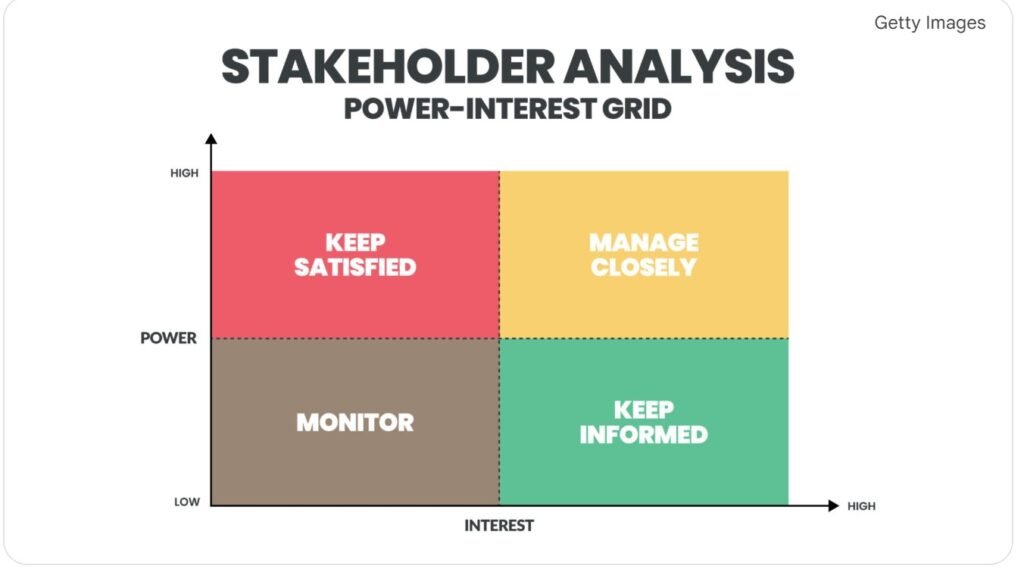
stakeholder-analysis-power-interest
The T-Shaped Professional
In modern business analysis, you are expected to have a broad range of general skills (the horizontal bar) and deep, specialized expertise (the vertical bar).
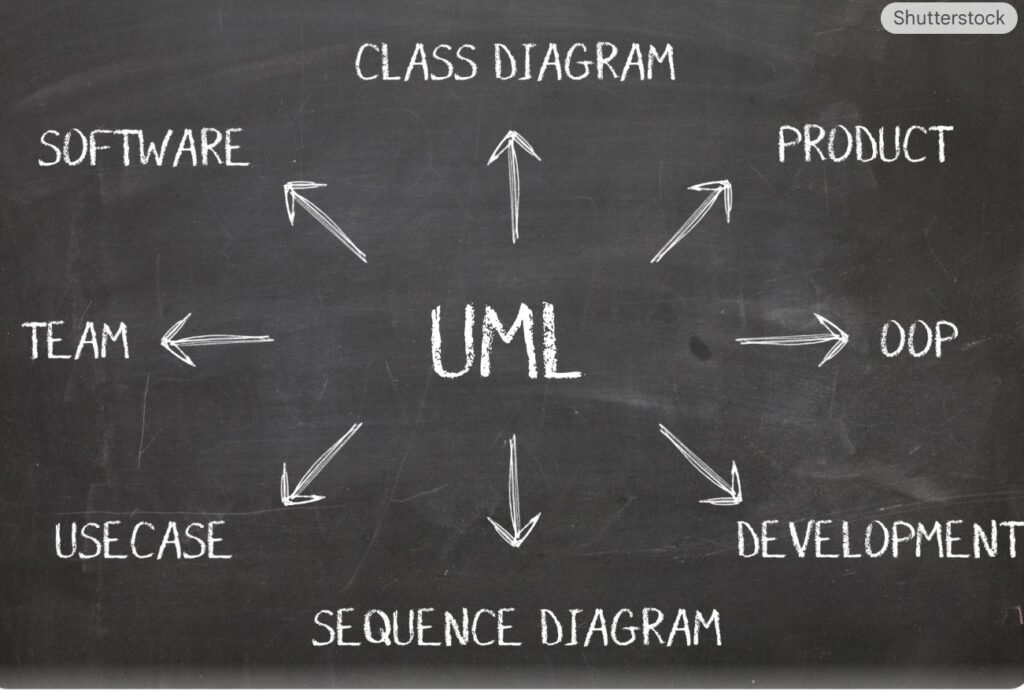
UML Use Case Diagrams
This diagram is used to show the boundary between the system and the external world. Actors are always shown outside the system boundary, while the functions (use cases) they perform are inside.
sequence-diagram
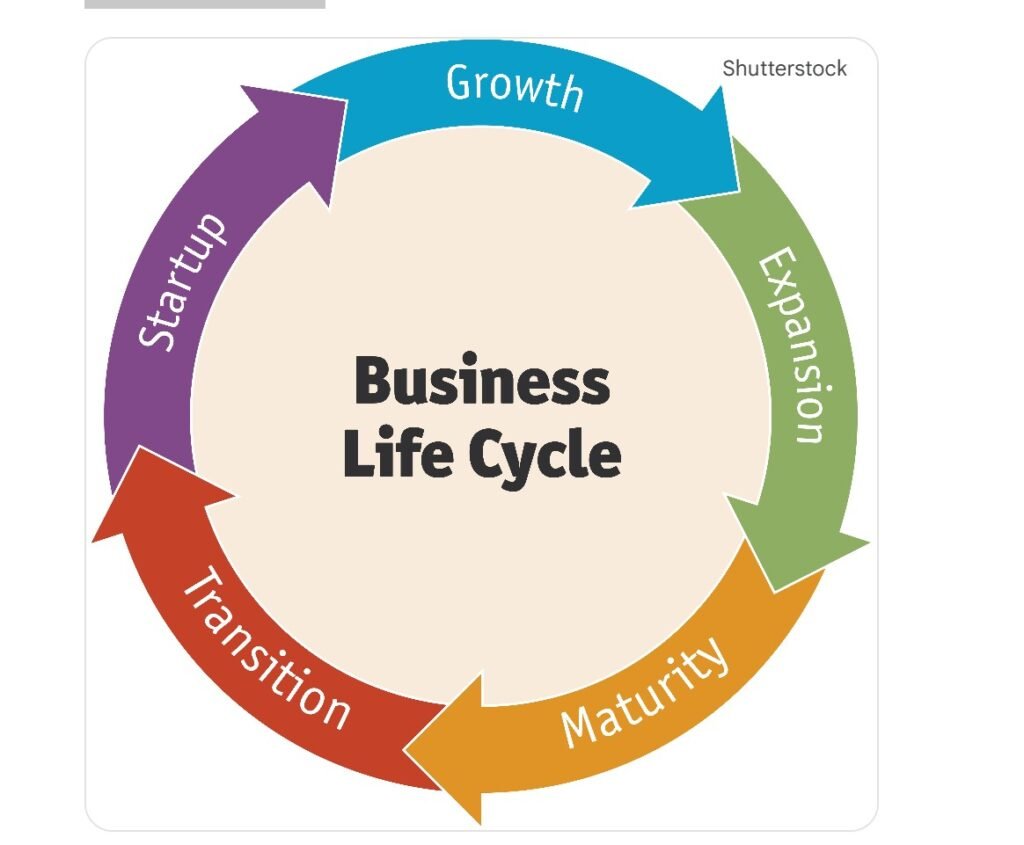
The Business Change Life Cycle
A business analyst is involved throughout this entire process—not just at the start. From initial Alignment to the final Benefits Realization, the BA ensures the solution remains relevant to the business need.
Here are 20 Practice Questions to Get You Certified!
1. The Business Change Life Cycle
Question: In which stage of the business life cycle are the requirements elicited?
-
A) Alignment
-
B) Definition
-
C) Design
-
D) Implementation
Answer: B. The Definition stage is where you identify the problems facing the business, consider possible solutions, and define the options. Requirements elicitation is central to this stage.
2. The T-Shaped Professional
Question: Which of the following is represented by the vertical bar in the model of a T-shaped professional?
-
A) Professional qualifications
-
B) Holistic skill sets
-
C) General skills and expertise
-
D) Deep skills in their specialist discipline
Answer: D. In the T-shaped model, the horizontal bar represents broad, general skills (like communication), while the vertical bar represents the deep, specialist expertise unique to your discipline.
3. Strategic Planning (VMOST)
Question: Which letter of the VMOST states the target states without regard to how this will be achieved?
-
A) Vision
-
B) Mission
-
C) Objectives
-
D) Tactics
Answer: A. The Vision is a futuristic picture of the target state. Unlike the Mission (the “how”) or Objectives (which must be SMART and achievable), the Vision describes the “what” without focusing on the specific plan to get there.
4. Business Analysis Service Framework (BASF)
Question: Which of the following services is not included in the BASF?
-
A) Business acceptance testing
-
B) Project management
-
C) Feasibility assessment
-
D) Business process Improvement
Answer: B. While a BA might perform project management tasks in some organizations, Project Management is not officially categorized as a business analysis service within the framework.
5. Discovery Workshops
Question: Which of the following techniques is useful to conduct during a Discovery Workshop?
-
A) Document analysis
-
B) Conducting a review
-
C) Stepwise refinement
-
D) Observation
Answer: C. Stepwise refinement involves breaking down a problem into steps to understand the root cause. While observation is a discovery technique, “stepwise refinement” is specifically effective within the interactive setting of a workshop.
6. Quantitative Observation
Question: Which technique is a quantitative form of observation used to establish how people divide their time at work into tasks?
-
A) Scenario analysis
-
B) Document analysis
-
C) Questionnaires
-
D) Activity sampling
Answer: D. Activity sampling is quantitative and involves observing the frequency and time spent on specific tasks. Scenario analysis, by contrast, is qualitative.
7. The Stakeholder Wheel
Question: Which of the following is a valid category of stakeholders as depicted on the stakeholder wheel?
-
A) Compliance, Regulators, Employees
-
B) Developers, Partners, Owners
-
C) Competitors, Customers, Managers
-
D) Users, Testers, Architects
Answer: C. Only Competitors, Customers, and Managers are all officially recognized categories on the standard stakeholder wheel.
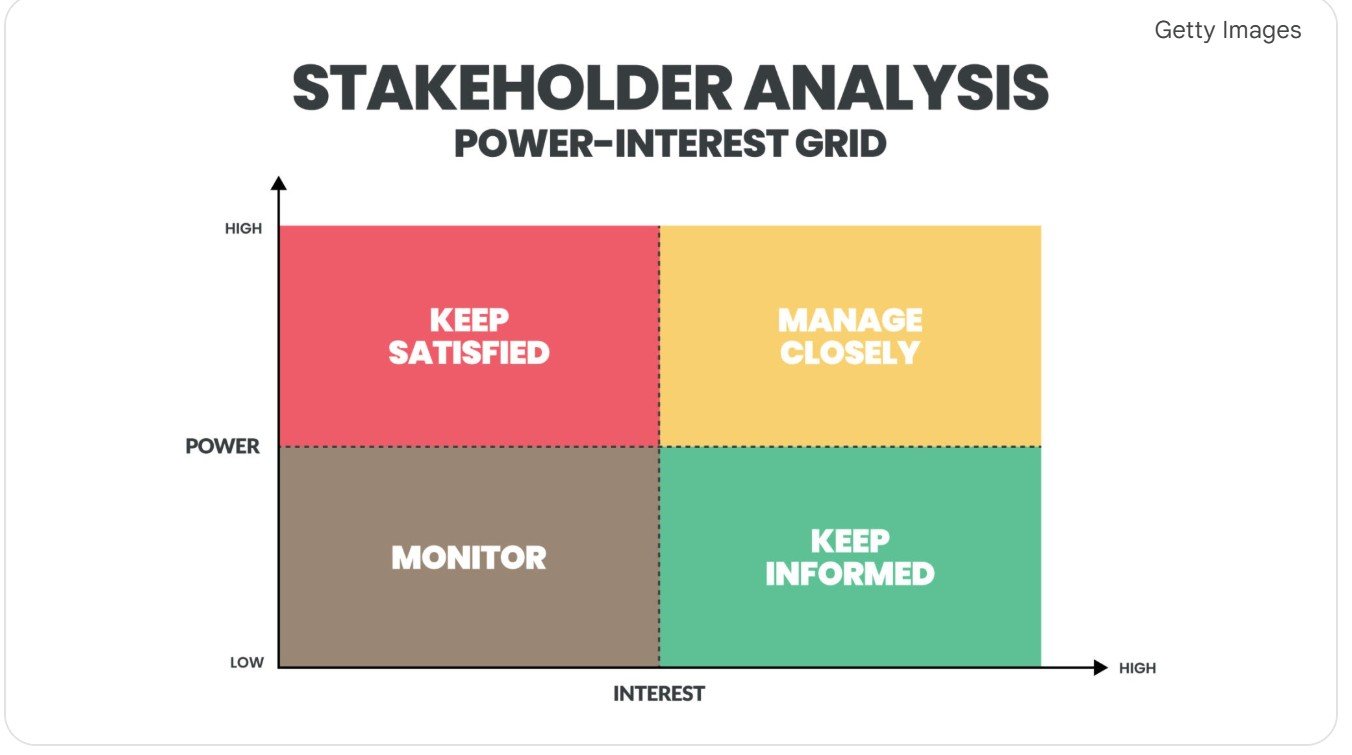
8. Power/Interest Grid
Question: A stakeholder has low interest and some power/influence. What is the resulting management strategy?
-
A) Watch
-
B) Keep on side
-
C) Keep satisfied
-
D) Keep informed
stakeholder-analysis-power-interest
Answer: B. When a stakeholder has power or influence (even if interest is low), the goal is to Keep them on side to ensure they don’t block progress.
9. UML Activity Models
Question: In which levels of the business hierarchy would a UML activity model be used?
-
A) Enterprise level only
-
B) Enterprise level and actor task level
-
C) Event response level and actor task level
-
D) Actor task level only
Answer: C. Activity models are “zoomed-in” views. They are too specific for the Enterprise level and are best suited for the Event Response and Actor Task levels.
10. Modeling Processes
Question: Which technique is appropriate to model Enterprise-level processes?
-
A) Organization chart
-
B) SIPOC
-
C) Value proposition
-
D) UML activity diagram
Answer: B. SIPOC (Suppliers, Inputs, Process, Outputs, Customers) provides a high-level process view. An organization chart is a functional view, not a process view.
11. Bottlenecks
Question: Which strategy identifies and eliminates congestion caused by one actor having too much work?
-
A) Simplifying the process
-
B) Changing task sequence
-
C) Redesigning for exceptions
-
D) Removing bottlenecks
Answer: D. A bottleneck occurs when the capacity of a process is limited by a single component or actor, causing a backup.
12. Gap Analysis
Question: What should be done once the existing and target situations have been compared?
-
A) Identify gaps to be addressed
-
B) Assemble target representations
-
C) Consider actions to address gaps
-
D) Assemble existing representations
Answer: A. After comparing “where you are” with “where you want to be,” the immediate next step is to Identify the gaps.
13. CARDI Log
Question: Which of the following would you expect to see on a CARDI log?
-
A) Authority
-
B) Decisions
-
C) Assumptions
-
D) Requirements
Answer: C. CARDI stands for Constraints, Assumptions, Risks, Dependencies, and Issues.
14. Requirements Engineering
Question: Which element of the framework ensures traceability?
-
A) Requirements analysis
-
B) Requirements validation
-
C) Requirements documentation
-
D) Requirements management
Answer: D. Requirements Management is the overarching process that includes version control and traceability.
15. Non-Functional Requirements
Question: Which type of requirement specifies the volume of data to be stored?
-
A) Non-functional
-
B) General
-
C) Technical
-
D) Functional
Answer: A. Volume of data is a “quality of service” issue. While functional requirements say what the system does, non-functional requirements describe how well or to what capacity it must perform.
16. Agile Backlogs
Question: How are user stories typically ordered in a product backlog?
-
A) By Priority
-
B) By size
-
C) By feature
-
D) By user
Answer: A. Stories are ordered By Priority to ensure the most valuable features are delivered first. Size (story points) relates to effort, not importance.
17. Use Case Diagrams
Question: Which statement about a use case diagram is true?
-
A) Shows associations between actors
-
B) Links actors via arrows
-
C) Uses a box to define project scope
-
D) Depicts actors as external to a system interacting with functions within it
sequence-diagram
Answer: D. Use case diagrams show actors (external) interacting with use cases (internal) inside a system boundary.
18. Requirements Validation
Question: Which statement regarding requirements validation is true?
-
A) It is the same regardless of the life cycle
-
B) In Agile, it only happens at Inception
-
C) In Agile, validation ensures requirements are sufficiently defined for an iteration
-
D) In Waterfall, sign-off is not required
Answer: C. In Agile, requirements are validated as they are refined for upcoming iterations (Sprints). Sign-off is required in Waterfall, and the approach varies significantly between methodologies.
19. Incremental Methodology
Question: In which methodology are feasibility and design established early, followed by multiple modules of development and implementation?
-
A) Iterative (Agile)
-
B) Incremental
-
C) Waterfall
-
D) V-Model
Answer: B. The Incremental approach does the heavy lifting of analysis/design upfront but delivers the product in smaller, functional pieces.
20. The BA Role
Question: Which statement regarding the BA role in the business change life cycle is false?
-
A) A BA is only involved in the definition stage
-
B) A BA contributes to all stages
-
C) A BA must understand alignment outputs regardless of who produced them
-
D) A BA assists with business readiness for implementation
Answer: A. This is False because a business analyst is a vital part of the entire life cycle, from initial alignment to post-implementation review.
10-question mini-exam
I have put together a 10-question mini-exam. These questions are designed to mimic the difficulty and style of the BCS Foundation and IIBA exams, focusing on applying the techniques like VMOST, the Stakeholder Wheel, and Gap Analysis to real-world scenarios.
Business Analysis Mini-Mock Exam
1. Which element of the Requirements Engineering Framework ensures that all stakeholders agree that requirements are accurate and complete?
Check Answer
Answer: Validation. Validation is the formal process of reviewing requirements with stakeholders to get sign-off.
2. Which diagramming technique shows the high-level scope of a system by depicting external actors?
Check Answer
Answer: UML Use Case Diagram. It uses actors and a system boundary box to define scope.
3. In an Agile environment, when is requirement validation primarily focused?
Check Answer
Answer: Ensuring requirements are ‘ready’ for a specific iteration. Validation is continuous in Agile.
Ready to Take Your BA Career to the Next Level?
Studying on your own is a great start, but nothing beats expert guidance and hands-on practice. If you’re looking to fast-track your certification and gain practical skills that will set you apart in the job market, I can help!
At Mbaken, we offer:
-
BCS Accredited Training: Earn your International Diploma in Business Analysis.
-
Live & Recorded Courses: Flexible learning that fits your schedule.
-
Career Coaching: Personalised advice to help you land your dream BA role.
Have any thoughts?
Share your reaction or leave a quick response — we’d love to hear what you think!
-
 0
0
-
 0
0
-
 0
0
-
 0
0
-
 0
0
-
 0
0
