Hey guys! It has been a hot minute since I was on here. If you’re not following me on Instagram, you wouldn’t know why I’ve been AWOL—I officially moved to the U.S. for school! I am currently living in the States and studying for my Master’s in Business Administration (MBA).
The truth is, I’ve struggled to find a balance between school and everything else. There’s a notion back home that schooling in the U.S. is “easy” if you did well in Nigeria. That is very false. The academic system here hits you quickly. For example, a 70% is a “C.” You have quizzes and assignments almost every single day. I can’t think of a week where I haven’t had at least three or four. Between midterms and finals, it’s intense. But I’m figuring it out, and I’ve even hired an editor to help me stay consistent here because I genuinely miss talking to you guys about money and personal development!
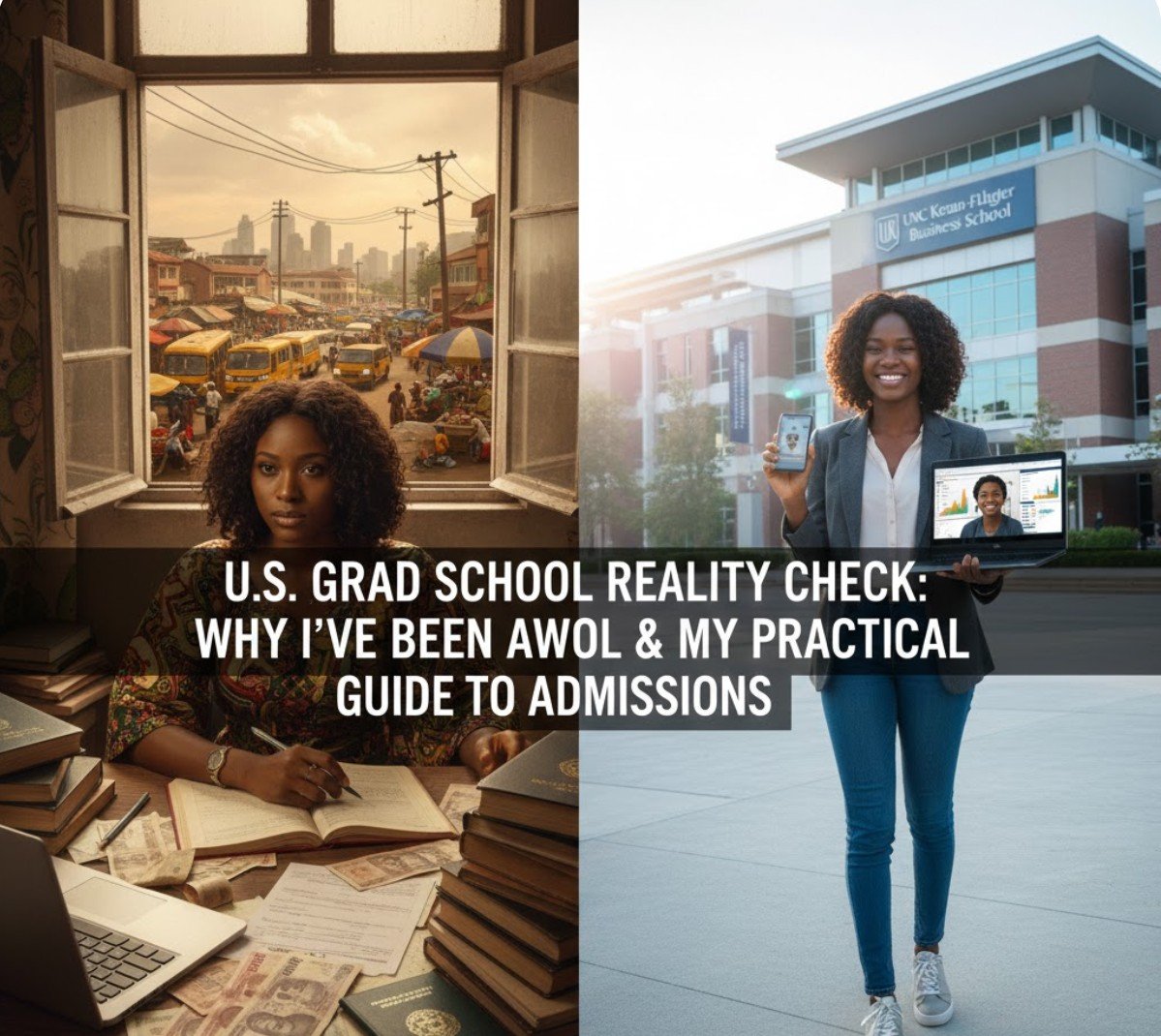
From Nigeria to North Carolina mba us travel
Since so many of you asked me questions on Instagram about the application process, I’ve put together this guide to help you start your journey.
1. The Reality of the Budget: What Does it Cost?
Before you even begin, you need to know the financial implications of the application phase. Here is a breakdown of what I spent:
| Expense | Estimated Cost |
| Application Fees | $35 – $200 per school |
| Transcript Evaluation (e.g., WES) | ~$160+ |
| Official Transcript Sending | ~₦37,000 (depending on your Nigerian university) |
| International Passport | ₦25,000 – ₦45,000 |
| SEVIS Fee | $350 |
| Visa Fee (GTBank) | ~₦67,700 |
Pro-Tip: Get your international passport yesterday. Don’t wait until you have admission. Also, check if your school requires a transcript evaluation agency like WES before paying for one.
What Does it Cost? (2026 Estimates)
The financial landscape has shifted since I first applied. If you are starting your process this year, you need a realistic budget that reflects current exchange rates and service fee hikes.
| Expense | Estimated Cost (USD) | Estimated Cost (NGN Equivalent) |
| Application Fees | $50 – $250 | ₦75,000 – ₦375,000 |
| Transcript Evaluation (WES) | ~$220+ | ₦330,000+ |
| Official Transcript Sending | N/A | ₦65,000 – ₦100,000 |
| International Passport (10-yr) | N/A | ₦100,000 – ₦150,000 |
| SEVIS Fee (F1 Visa) | $350 | ₦525,000 |
| MRV Visa Fee (GTBank) | $185 | ₦277,500 |
Note on 2026 Pricing: The Nigerian Passport fees were officially increased late in 2024, and logistics for transcript shipping (DHL/UPS) have doubled due to fuel and currency adjustments. Always check the U.S. Embassy & Consulate in Nigeria for the most current MRV fee, as it is pegged to the dollar.
Budgeting Tips for 2026 Applicants:
-
Start Your Sinking Fund Early: Because the Naira is volatile, save in a “stable” format if possible, or build a 20% buffer into your budget to cover sudden exchange rate jumps.
-
Look for Fee Waivers: In 2026, many U.S. schools are offering application fee waivers if you attend their virtual open days or webinars. This can save you hundreds of thousands of Naira.
-
Digital Transcripts: Check if your Nigerian university has finally moved to e-transcripts. It is much cheaper and faster than the ₦100k physical shipping via DHL.
2. Can You Switch Courses?
Yes! I studied Sociology and Anthropology for my undergraduate degree, and now I’m doing an MBA. While you can’t jump from Accounting to Medicine, many Master’s programs are open to different backgrounds. Do your research and make inquiries with the school’s admission office before you apply.
3. The Visa Interview: Why I Chose Abuja
A lot of people think getting a U.S. visa is impossible. It’s not, but it is tedious. Unlike some other countries, you can’t just “pay your way through.”
I did my interview in Abuja. Why? In my experience, the atmosphere there is calmer. People aren’t as stressed by Lagos traffic or madness. I’ve seen people denied in Lagos who then flew to Abuja and got their visas. Regardless of where you go, the key is how you present yourself and answer questions.
4. Making Yourself Marketable for Scholarships
You don’t need to own a massive company to get in, but work experience is a huge bonus.
-
The “Magic” Number: Having at least 3 years of experience helps significantly with scholarships.
-
Initiative: If you have a startup or have won awards, mention it! Schools love students who take initiative.
-
GPA: A good GPA makes funding more likely, but it’s not the only factor. I know people with no “extraordinary” awards who still got admission because they packaged their experience well.
5. Tips for Applying to Top Schools (Like UNC)
I’m currently at the University of North Carolina (UNC) Kenan-Flagler Business School. If you are looking at top-tier schools, keep these tips in mind:
-
The STAR Method: During interviews, use the Situation, Task, Action, and Result format to tell stories about your challenges and successes.
-
Apply Early: Aim for Round 1 to be considered for the most scholarship money.
-
Know Your Resume: If you can’t explain an item on your resume, don’t put it there.
6. Scholarship Schemes to Watch
Many schools partner with external organizations for funding. For example, I am a Forté Fellow. The Forté Foundation partners with schools to sponsor women in business. Check your school’s “Financial Aid” or “Funding” page to see which NGOs or institutions they partner with.
7. F1 Visa Interview Advice
This is the part most people neglect. You can have all the documents in the world and still fail the two-minute interview.
-
The Best Resource: I highly recommend the YouTube channel Algo Visa. I binged their videos to prepare.
-
Fill Your Own Forms: Fill out your DS-160 yourself. You need to know exactly what is on that form so your verbal answers match your written ones.
-
Look the Part: Look like a student. Don’t overdress in a full suit like a banker, and don’t show up looking rough. Aim for “relaxed casual” or “relaxed formal.”
-
Body Language: Smile! Be confident and calm. When they ask why you’re going, be specific: “I am going to study for my MBA at the University of North Carolina.”
Moving to the U.S. for school is absolutely possible if you set your mind to it. It’s a lot of work, but the future is bright!
Are you planning to apply for the next intake? Let me know your questions in the comments below!
